Beyond the classroom
The forty per cent
that isn’t the syllabus

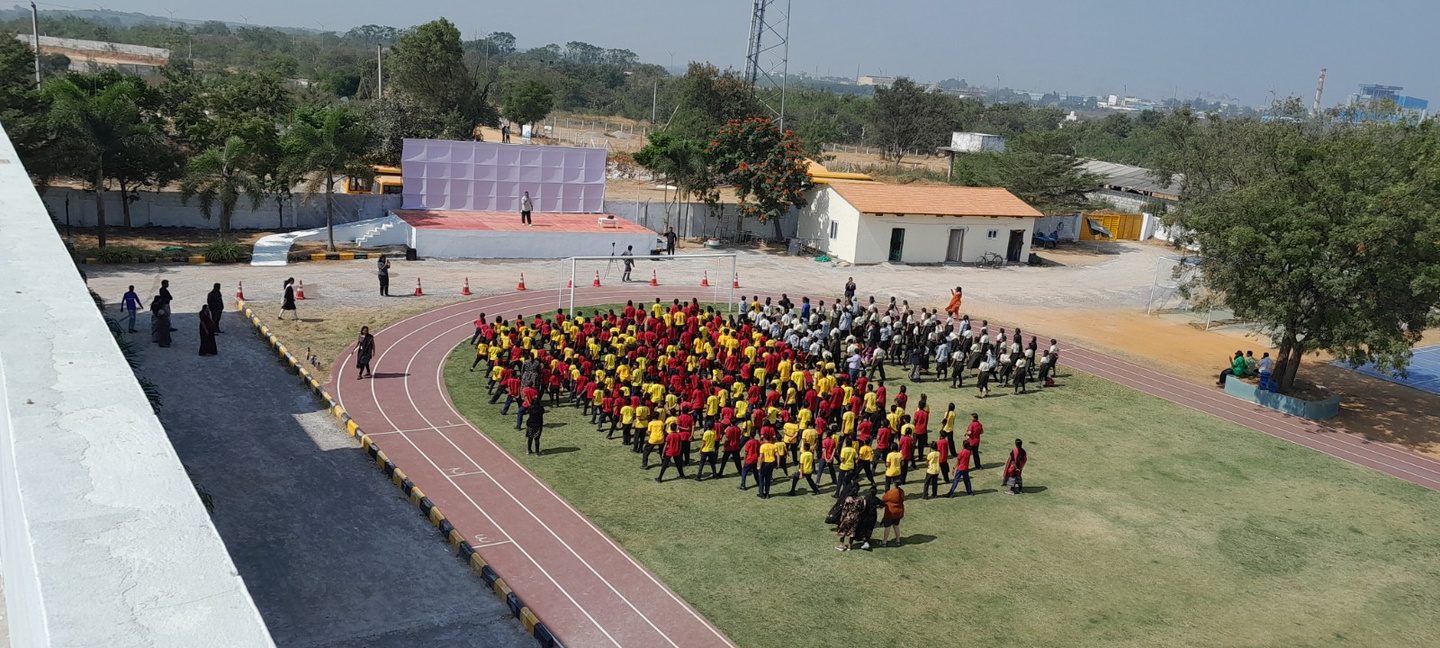
Taekwondo on the main ground
Co-curricular
Each programme is tagged with the pillars it feeds. Logos link to the partner.

Cambridge Assessment English
Children leave able to hold a conversation and defend an idea, not just pass a comprehension paper.
Communication and STEM
Conceptual learning


CognoSpace
A hands-on STEM programme run in a dedicated lab on campus, built around activity kits rather than demonstrations. Students build, test and fail at things in front of them instead of reading about the result.
Science stops being a set of facts to memorise and becomes something a child can take apart.
Communication and STEM
Thinking and creativity

Khan Academy
Self-paced mathematics that lets each child work at the level they are actually at. Teachers use the progress data to spot exactly which concept a struggling student lost, rather than re-teaching a whole chapter.
A child who is ahead isn’t held back, and a child who is behind isn’t quietly left there.
Conceptual learning
Thinking and creativity

LogIQids
A weekly logical-reasoning programme — pattern recognition, spatial reasoning, deduction and lateral thinking — taught as a subject in its own right rather than as puzzles at the end of a maths chapter.
Builds the habit of working a problem through when the method isn’t obvious.
Thinking and creativity
Conceptual learning
EduSports

EduSports
A structured, age-appropriate PE and sports curriculum from Sportz Village, with daily lesson plans and trained coaches. Fitness is assessed and reported each year like any other subject, so physical development is tracked rather than assumed.
Sport becomes a measured part of a child’s education instead of a free period.
Social and emotional wellbeing
Thinking and creativity

Addresshealth
Health education delivered by qualified doctors who teach in the classroom, covering nutrition, hygiene, puberty and mental wellbeing, alongside periodic health screening on campus.
Children learn about their own bodies from a doctor rather than from the internet.
Social and emotional wellbeing

Fyule Video Lab
Students plan, script, shoot and edit their own video work. The output is a finished piece with their name on it, which is a very different exercise from writing an essay nobody else will read.
Teaches children to hold an audience — the most transferable skill on this page.
Communication and STEM
Thinking and creativity

Go Sharpener
A sustainability programme that runs on student-led projects — waste audits, plastic-free campaigns, composting, tree planting — with the impact tracked and recognised rather than left as an assembly talk.
Responsibility is learned by being given some, not by being told about it.
Social and emotional wellbeing
Thinking and creativity
SOF Olympiads
Students sit the Science Olympiad Foundation’s national examinations in maths, science and English, giving them a benchmark against peers across the country rather than only against their own class.
Shows a child where they really stand, and what it takes to move.
Conceptual learning
Thinking and creativity
Extra-curricular
Performing arts
Music
·
Dance
Timetabled from pre-primary upward, and the backbone of every assembly and annual day.
Mind and body
Yoga
·
Taekwondo
Yoga for breath, posture and focus. Taekwondo for discipline, confidence and self-defence — taught by a dedicated instructor.
Indoor sports
Carrom
·
Chess
·
Puzzle games
For wet days and break times, and for the children who find their competitive edge sitting down.
Outdoor sports
Football
·
Basketball
·
Volleyball
·
Badminton
·
Cricket
·
Athletics
·
Cone-based games
Four acres means full-size grounds and real courts, not a marked-out corner of a car park.
Grades VI to VIII
Competency-based preparation that runs alongside the CBSE syllabus rather than replacing it.
✓
Maths, Physics, Chemistry and Biology across six additional periods a week.
✓
In-house books with exhaustive question banks, written for the programme.
✓
A fortnightly micro-schedule so delivery stays systematic.
✓
Fortnightly tests, with reports that name strengths and learning gaps.
The four C’s
Critical thinking
Analysing information, solving problems, making sound decisions.
Collaboration
Working in teams, sharing responsibility and shared goals.
Communication
Creativity
Innovative thinking, fresh perspectives, original ideas.
The sports programme
Physical education runs on the EduSports curriculum from Sportz Village — age-appropriate, with daily lesson plans and trained coaches. Each child’s fitness is measured and reported every year, so physical development is tracked rather than assumed. It all builds toward the annual sports fest on the Laurus ground.


Football

Cricket nets

Volleyball
Basketball

Taekwondo
Houses
The house system runs sport, assembly presentations and a good deal of friendly rivalry across every grade.

Spartans
Discipline and courage, tested on the field.

Samurais
Focus and precision, in the classroom and out.

Knights
Loyalty and teamwork, house before self.
The library programme
Students take the lead in the library — choosing, presenting and teaching what they’ve read to their peers. It builds the reading habit through ownership rather than a reading log.
The English board — explore, learn, celebrate — carries the best of that work into the corridor where everyone sees it.