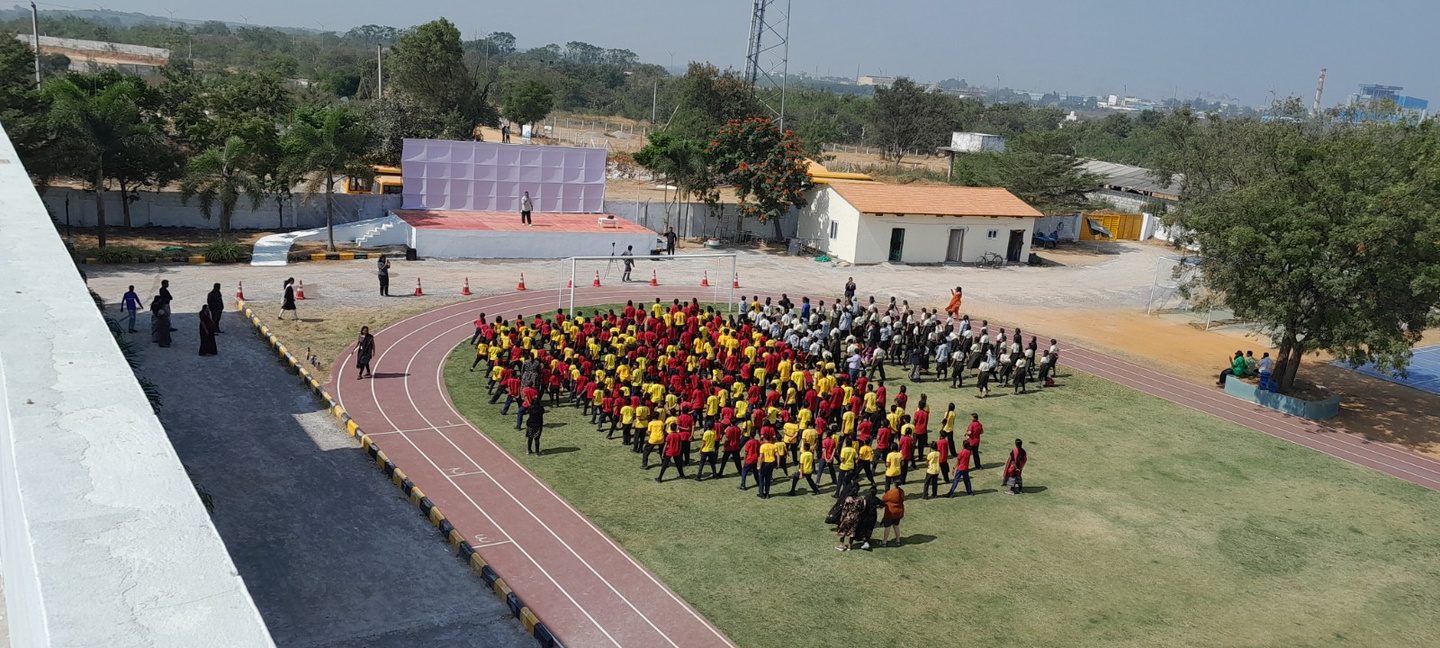
Academics
How we
actually teach
The CBSE syllabus is the floor, not the ceiling. What follows is the structure we build around it.
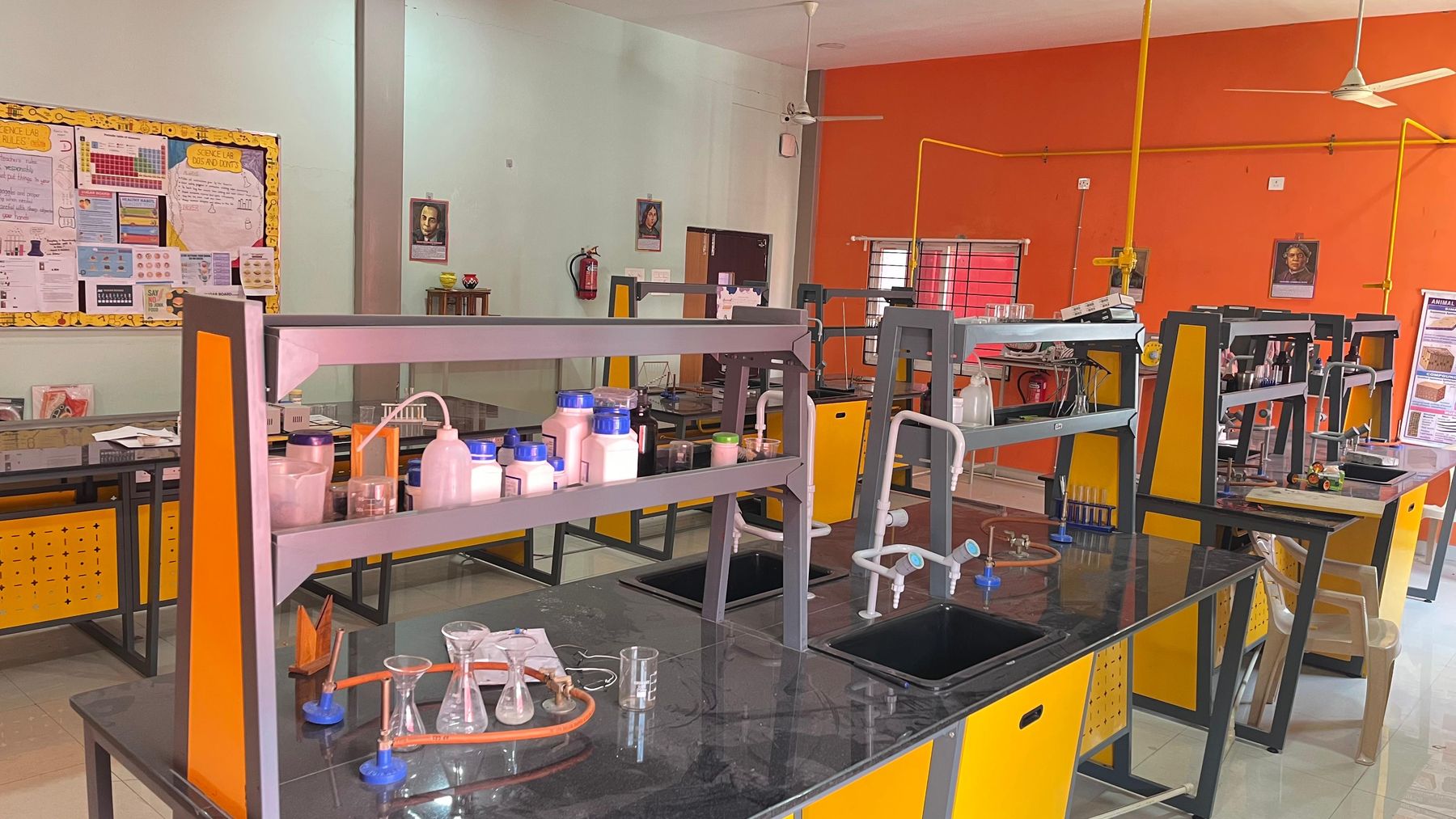
The science lab
The same split governs every timetable in the school, so co-curricular and extra-curricular time can’t quietly be borrowed for revision.
·
·
·
The four pillars
Conceptual learning
Ideas taught to be understood, not recited.
Communication and STEM
Language and technical skill built side by side.
Thinking and creativity
Logical reasoning paired with room to imagine.
Social and emotional wellbeing
Health and happiness carry equal weight.
Method
Six stages, in the same order, for every unit. The sequence is what keeps teaching consistent between classrooms.

Project day — students explaining their own work.
01
02
03
04
05
06
Measurement
Academic work is planned and reviewed against the revised taxonomy, so lessons move deliberately from remembering and understanding toward analysing, evaluating and creating — rather than stopping at recall.
1
2
3
4
5
6
Lower orders of thinking at the base, higher orders above. Most teaching stops at the first two.
Stages

Nursery – PP2
Pre-primary
Play-led routines, early literacy and numeracy, and the habits that make school feel safe.

Grades I – V
Primary
Concept-first teaching, activity-based assessment and the start of Cambridge ELT.

Grades VI – X
Secondary
Board preparation with the IIT-Olympiad programme running alongside the CBSE syllabus.